
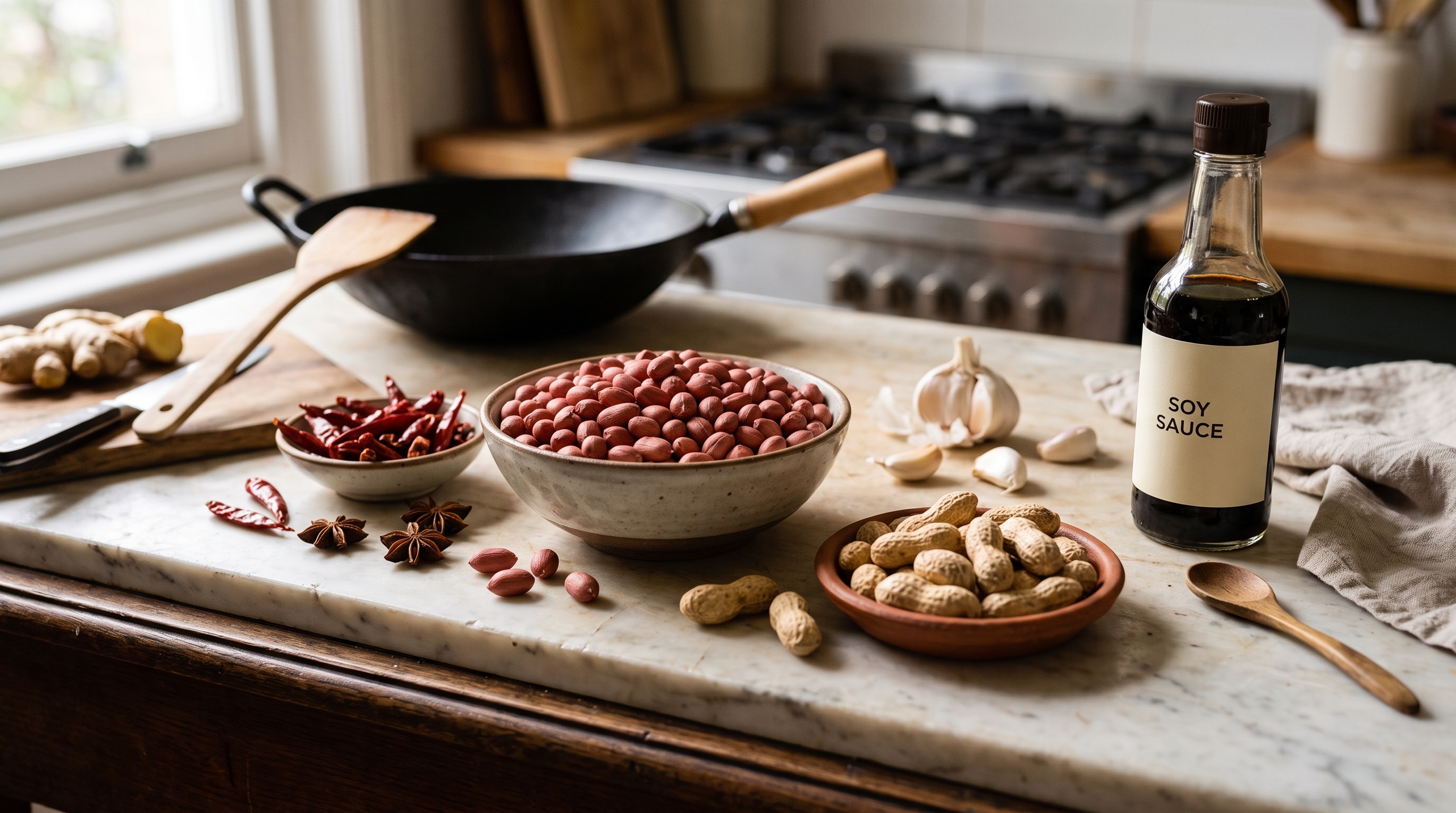
There is something special about starting with a raw peanut. Before any roasting or salt, it is a blank slate, ready to become a pot of boiled peanuts, a crunchy garnish, a silky sauce, or a sweet treat.
Raw shelled peanuts are one of our most popular products all year long, and the cooks who order them make just about everything. Some are stirring up Southern peanut brittle for the holidays. Others are braising peanuts in soy sauce for a Korean side dish, simmering them with star anise, or roasting a batch for a Vietnamese dipping sauce.
This guide covers what you need to know to cook with raw peanuts at home: how they differ from roasted peanuts, what to do about the skins, the best ways to cook them, and how peanuts show up in kitchens across Asia.
What Are Raw Peanuts?
Raw peanuts are peanuts that have been harvested and dried, but not roasted, fried, or seasoned. Drying brings their moisture down so they keep well, which means you can cook with them any time of year. You will find them two ways:
- Raw shelled peanuts are ready to use. They are the most versatile choice for roasting, frying, grinding, braising, and baking.
- Raw peanuts in the shell are the classic choice for boiling and for roasting whole.
Raw peanuts are not the same as green peanuts. Green peanuts are freshly dug and never dried, so they are only around during harvest season and need to be refrigerated and used quickly. Dried raw peanuts take a little longer to cook, but they turn out tender and full of flavor all year long.
Raw vs. Roasted Peanuts: When to Use Each
Roasted peanuts are cooked and ready to eat. Raw peanuts are an ingredient. That difference matters most when a recipe needs the peanut to soak up flavor or change texture.
| Raw Peanuts | Roasted Peanuts | |
|---|---|---|
| Flavor | Mild and a little beany until cooked | Rich, toasty, and nutty |
| Texture | Firm; softens when boiled or braised, crisps when roasted or fried | Crunchy |
| Best for | Boiling, braising, frying, soups, sweets, and roasting your own way | Snacking, toppings, and recipes that call for ready-to-eat peanuts |
| Why cooks choose them | You control the salt, oil, seasoning, and doneness | Convenience |
A good rule of thumb: if the peanuts will simmer in liquid, start with raw. Roasted peanuts do not soften or soak up flavor the same way. For a crunchy topping or a peanut sauce, you can roast raw peanuts yourself for the freshest flavor, or save a step with our unsalted peanuts.
Shelled or In the Shell?
Choose raw shelled peanuts for almost any recipe where the peanut is an ingredient: sauces, stir-fries, soups, candies, and baking. They save you the shelling, and they cook evenly.
Choose raw peanuts in the shell when the shell is part of the experience. Boiled peanuts are the best example. The shell holds on to the seasoned brine, so every peanut you crack open is full of flavor.
Skins On or Off?
Our raw shelled peanuts come with their thin, papery red skins still on. Whether you keep them depends on the dish.
Keep the skins on for boiling, frying, braising, and most savory cooking. The skins add a little color and a pleasant, earthy bite. They also carry some good nutrition: according to The Peanut Institute, peanut skins contain antioxidants, including polyphenols, along with fiber.
Take the skins off when you want a smooth texture or a pale color, as in sweet peanut soups, silky sauces, and some candies.
How to Remove Peanut Skins
- The hot water method. Bring a pot of water to a boil, add the raw shelled peanuts, and let them sit for about 3 minutes. Drain, rinse with cool water, and gently pinch each peanut. The skin should slide right off.
- The freezer method. Freeze raw shelled peanuts for several hours or overnight. Take out a few at a time and slip the skins off with your fingers.
- The roast and rub method. Roast the peanuts first (see how to roast peanuts), let them cool until you can handle them, then rub them in a clean kitchen towel. The skins flake away.
The Best Ways to Cook Raw Peanuts
Boil
Boiling turns raw peanuts soft, tender, and full of whatever flavor you add to the pot. In the South, that usually means plenty of salt, and sometimes a little Cajun spice. In Chinese kitchens, peanuts often simmer with star anise, Sichuan peppercorns, and cinnamon, then rest in the brine and are served cold.
Dried raw peanuts in the shell take longer than green peanuts, so plan on an overnight soak and a few hours of simmering. Our recipe for Chinese-style boiled peanuts with star anise walks you through every step.
Roast
Roasting brings out the deep, toasty flavor most of us picture when we think of a peanut. Spread raw shelled peanuts in a single layer on a baking sheet and roast at 350°F, stirring partway through. Our guide on how to roast peanuts has the details.
You can also toast peanuts in a dry skillet or wok. Keep the heat at medium-low and stir constantly, since peanuts go from golden to scorched quickly. Roast your peanuts before grinding them into a sauce or crushing them for a topping.
Fry
Fried peanuts are a favorite in many Asian kitchens, whether they are scattered over congee, tossed into kung pao chicken, or set out as a crunchy snack. The secret is patience.
- Rinse raw shelled peanuts, skins on, and let them air-dry completely.
- Place them in a wok or pot and add enough neutral oil to just cover them. Start with cold oil.
- Cook over medium-low heat, stirring gently, until the peanuts crackle and the skins turn a shade darker. This usually takes 7 to 12 minutes.
- Turn off the heat a minute or two before they look done. The hot oil will keep cooking them.
- Drain, spread them out to cool, and sprinkle with salt. They turn crunchy as they cool.
Braise and Simmer
Raw peanuts soak up flavor beautifully when they simmer in a sauce. In Korea, soy-braised peanuts (ttangkong jorim) are a much-loved banchan, or side dish. The peanuts are boiled briefly, then simmered in soy sauce, water, and a little sugar or syrup until the sauce turns glossy and clings to every peanut.
Raw peanuts belong in soups, too. Sweet peanut soup, enjoyed in Chinese and Taiwanese homes, simmers skinned peanuts until they are very soft, and savory soups like lotus root soup often include peanuts for richness.
Soak and Steam
For Vietnamese sticky rice with peanuts (xôi đậu phộng), raw peanuts soak alongside glutinous rice, then steam together until tender. Soaking softens the peanuts so they cook at the same pace as the rice.
Grind
Ground peanuts are the backbone of peanut sauces, dressings, and chutneys. For most recipes, roast the peanuts first, then grind them to the texture you need: coarse for a crunchy garnish, fine for a smooth sauce. You can also turn them into homemade peanut butter with our guide on how to make peanut butter.
Raw Peanuts in Kitchens Across Asia
Peanuts are a pantry staple in kitchens across Asia, where they add crunch, richness, and body to dishes both savory and sweet. We know peanuts well, but the cooks who make these dishes every day know them best, so think of this as the peanut side of the story.
| Cuisine | Dish | How the Peanuts Are Used | Start With |
|---|---|---|---|
| Chinese | Boiled peanuts with star anise | Simmered in a spiced brine and served cold | Raw peanuts in the shell |
| Chinese | Kung pao chicken; fried peanuts with congee | Fried or roasted for crunch | Raw shelled peanuts |
| Chinese and Taiwanese | Sweet peanut soup | Skinned and simmered until soft | Raw shelled peanuts |
| Vietnamese | Peanut dipping sauce for fresh spring rolls | Roasted, then ground into the sauce and crushed on top | Raw shelled peanuts |
| Vietnamese | Sticky rice with peanuts (xôi đậu phộng) | Soaked and steamed with glutinous rice | Raw shelled peanuts |
| Thai | Peanut sauce for satay; pad thai | Roasted, then ground or chopped | Raw shelled peanuts |
| Korean | Soy-braised peanuts (ttangkong jorim) | Boiled briefly, then braised in a soy sauce glaze | Raw shelled peanuts |
| Indonesian | Gado-gado | Roasted or fried, then ground into a peanut sauce | Raw shelled peanuts |
| Filipino | Kare-kare; garlic peanuts (adobong mani) | Ground toasted peanuts thicken the stew; fried with garlic for a snack | Raw shelled peanuts |
| Indian | Peanut chutney; chikki | Roasted and ground; roasted and set in jaggery | Raw shelled peanuts |
Ready to start cooking? Try our Chinese-style boiled peanuts with star anise.
How Many Raw Peanuts Do You Need?
A pound of raw shelled peanuts is roughly 3 cups, which covers most sauces, stir-fries, and batches of candy with some to spare. If you cook with peanuts often, buying a larger bag brings the price per pound down.
Our raw shelled peanuts come in 3-pound and 5-pound bags, including multi-packs, plus 25-pound and 45-pound bags. Our peanuts in the shell come in 5-pound bags and 25-pound boxes. For help choosing, see our complete guide to buying peanuts in bulk.
How to Store Raw Peanuts
Heat and air are what turn peanuts stale, so keep raw peanuts cool and sealed. Raw peanuts hold a bit more moisture than roasted ones, so the refrigerator or freezer is the best place for them. Store them in an airtight container or freezer bag, and take out just what you need.
Fresh peanuts taste clean and slightly sweet. If a peanut tastes bitter or sharp, it has turned, and it is time for a fresh batch.
Frequently Asked Questions About Cooking with Raw Peanuts
-
Can you eat raw peanuts?
As with many agricultural food products, we recommend cooking raw peanuts before you eat them. Like other raw foods from the farm, raw peanuts can carry naturally occurring bacteria from the environment, and cooking helps reduce that risk. It also brings out the rich, nutty flavor you expect from a peanut. Boil, roast, fry, or braise them, and enjoy.
-
What is the difference between raw and roasted peanuts?
Raw peanuts have been dried but not cooked. Roasted peanuts have been cooked with dry heat or oil and are ready to eat. Use raw peanuts when a recipe needs them to soften or soak up flavor, as with boiled or braised peanuts, and roasted peanuts for snacking and toppings.
-
Are raw peanuts the same as green peanuts?
No. Green peanuts are freshly harvested and not dried, so they are seasonal and very perishable. Raw peanuts have been dried for storage, so they are available year-round. They take longer to boil than green peanuts but work well in any boiled peanut recipe.
-
Do I need to remove the skins from raw peanuts?
Usually not. Keep the skins on for boiling, frying, and braising. Remove them when you want a smooth texture or a light color, such as in sweet peanut soup or a silky sauce. The easiest way is to soak the peanuts in just-boiled water for about 3 minutes, then slip the skins off.
-
What is the best way to cook raw peanuts?
It depends on what you are making. Boil raw peanuts in the shell for a soft, seasoned snack. Roast or fry raw shelled peanuts for crunch. Braise them in a sauce for a tender side dish, or roast and grind them for peanut sauce.
-
Should I roast raw peanuts before making peanut sauce?
Yes, for most peanut sauces. Roasting deepens the flavor and makes the peanuts easier to grind smooth. Let them cool before grinding.
-
How should I store raw peanuts?
Keep them in an airtight container in the refrigerator or freezer. Cold, sealed storage keeps their natural oils fresh much longer than the pantry.
-
Where can I buy raw peanuts online?
Right here. Aunt Ruby's has been family-owned and operated for more than 50 years, and we hand-select the largest, freshest Virginia-style peanuts. We ship raw shelled peanuts and peanuts in the shell, from single bags to bulk sizes, fresh right to your door.
Start with Good Peanuts
Whether you are simmering a pot of spiced peanuts, frying a batch for congee, or stirring up a Southern brittle, it all starts with good peanuts. Come browse our raw peanuts and see why so many cooks keep coming back. We would love to have you.
Shop Raw Peanuts